Innovative Techniques for Growing Mushrooms Using Spent Blocks and Alternative Methods
Mushroom cultivation has evolved beyond traditional approaches, offering growers multiple ways to maximize yields and sustainability. One of the exciting trends in mushroom agriculture is using spent blocks (substrates that have already produced mushrooms once) to grow new crops. This approach supports a circular economy by reducing waste and making the most of resources. Alongside spent block methods, there are alternative growing techniques that do not rely on spent substrates but still deliver strong results.
This post explores practical methods for growing mushrooms with spent blocks, including the bucket method, letting blocks sit in their original bags, the burlap method, and the mulch method. It also covers other popular growing techniques without spent blocks, such as the jar method, garden path method, plugging logs, buckets, and tubs. Whether you are a hobbyist or a commercial grower, these insights will help you expand your mushroom cultivation skills.
Growing Mushrooms Using Spent Blocks
Spent blocks are substrates that have already been used to grow mushrooms but still contain nutrients and mycelium capable of producing more mushrooms. Using spent blocks is a smart way to extend the life of your substrate and reduce waste, aligning with circular economy principles.
Bucket Method

The bucket method is a simple way to reuse spent blocks for mushroom growing. Here’s how it works:
Prepare the bucket: Use a clean plastic bucket with holes around the sides drilled for air exchange and drainage.
Place the spent block inside: Break the block into small pieces, like in the photo above - this encourages the mycelium to regenerate new networks and "colonize" the substrate again.
Add moisture: Give the bucket a deep water and let the the water drain out so that the substrate is not soaking, but holds moisture.
Maintain humidity: Cover the bucket with the lid and continue to mist around the holes.
Wait for fruiting: Mushrooms will start to grow from the block’s holes after a few weeks.

Letting Spent Blocks Sit in Their Original Bags

Another low-effort approach is to leave spent blocks in their original growing bags. After the first harvest, keep the bags in a shaded, humid area and mist them daily. The mycelium inside can produce additional flushes of mushrooms over time.
Key tips:
Ensure the bags have enough holes or slits for fresh air.
Avoid direct sunlight to prevent drying out by keeping it in a moist, shaded environment.
Monitor moisture levels carefully.
Enjoy the harvest!
This method is popular among growers who want to maximize output without repotting or transferring substrates.

Burlap Method

Using burlap sacks with spent blocks offers a breathable and reusable container for mushroom growth and can often lead to massive flushes! The process involves:
Stuffing a burlap sack with broken-up spawn. (same consistency as with the buckets)
Placing the sack in a shaded, humid spot and watering deeply.
Keeping the burlap moist by misting regularly.
Burlap allows air circulation while retaining moisture, creating an ideal microclimate for mushrooms. This method suits growers looking for a low-cost, biodegradable option that supports sustainability. Pro-tip: Often times you can get burlap sacks for free at coffee shops!

Growing Mushrooms Without Spent Blocks
While spent blocks offer sustainability benefits, many growers prefer starting fresh with other methods. These techniques often involve sterilized or pasteurized substrates and controlled environments.
Jar Method

The jar method is a classic approach for mushroom cultivation, especially for beginners:
Fill glass jars with sterilized grain or sawdust substrate.
Inoculate with mushroom spawn using a layering technique.
Seal jars with breathable lids or filter patches.
Incubate in a warm, dark, humid place until fully colonized.
You can let it fruit in the jars or transfer colonized substrate to fruiting containers or bags.
This method allows precise control over contamination and is excellent for producing spawn to innoculate bigger quantities of substrate or letting them fruit themselves as an experiment.

Garden Path Method
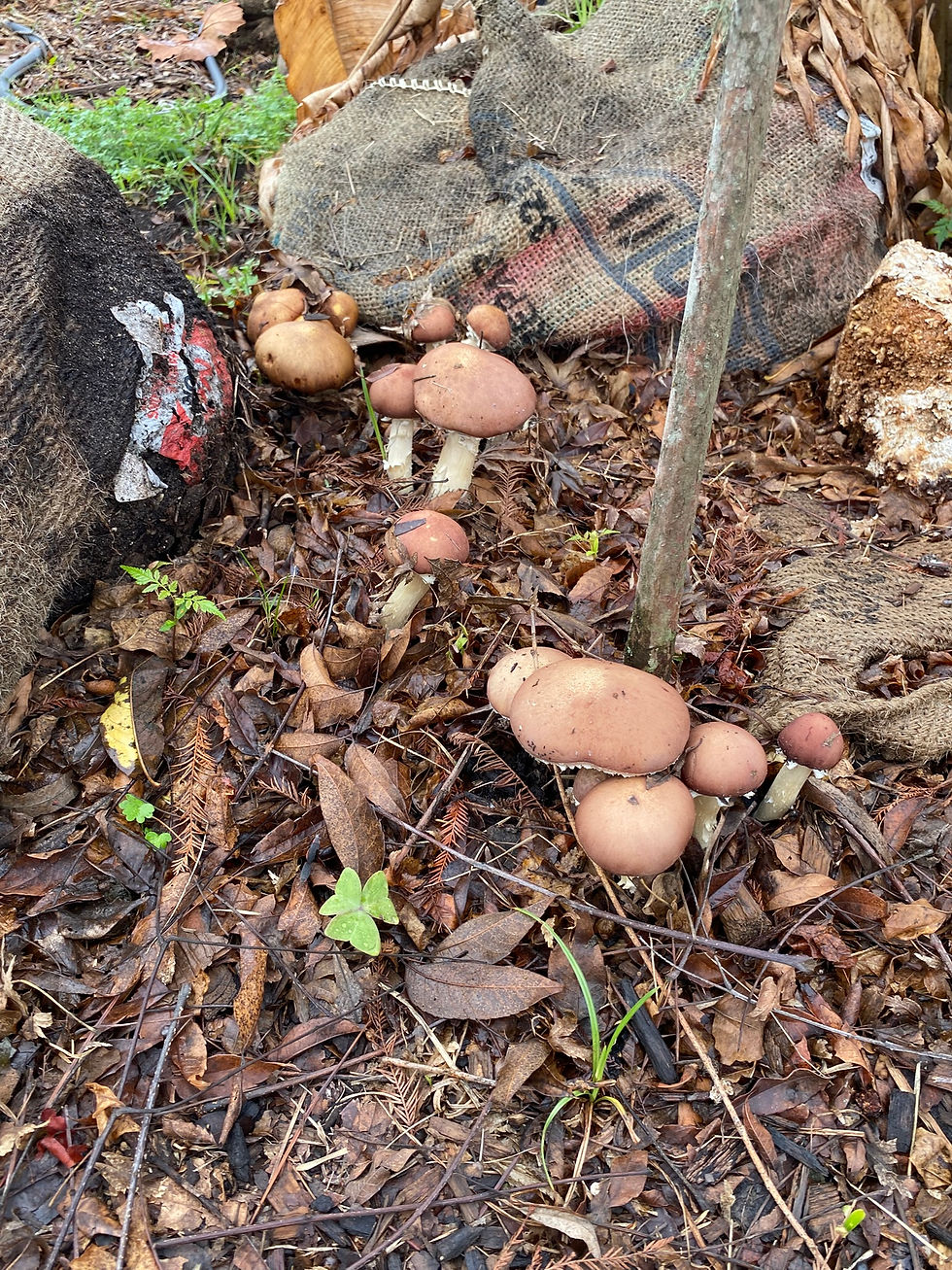
The garden path method integrates mushroom growing into outdoor landscaping:
Prepare a shaded garden path with wood chips or straw.
Inoculate the path with fresh mushroom spawn and cover with a thin layer of mulch or leaves.
Maintain moisture with regular watering or irrigation.
Harvest mushrooms as they appear along the path.
Mushrooms will fruit from the mulch as the mycelium colonizes the organic material. This process can mimic how mushrooms grow in a forest and is a great way to learn about forest cycles! This technique works well for species like oyster and King Stropharia (wine cap) varieties and integrates mushroom growing with garden or farm ecosystems.
Plugging Logs

Plugging logs is a traditional and effective way to grow mushrooms like shiitake, reishi, or chicken of the woods. The process includes:
Drilling holes into hardwood logs.
Inserting mushroom spawn plugs into the holes.
Sealing the holes with wax to protect spawn from contamination.
Stacking or burying logs in a shaded, humid area.
Watering logs periodically to maintain moisture.
Logs can produce mushrooms for several years, making this method a long-term investment in mushroom agriculture.

Buckets and Tubs

Using buckets or tubs filled with sterilized substrate is a flexible method for mushroom growing. This is just like using spent blocks, but instead you start from the very beginning.
Sterilize substrate mix using your preferred method and fill bucket.
Inoculate with spawn.
Water and drain so it's not soggy.
Maintain humidity and temperature throughout the colonizing stage.
Wait until the substrate is fully colonized (mostly white), then increase air flow and light!
Harvest mushrooms as they grow from the substrate surface.
This method suits growers with limited space or those experimenting with different mushroom varieties.
Reflections:
You can start growing mushrooms in so many different ways, just choose the method that works best for you!


Comments